Artificial Intelligence (AI) is no longer a futuristic concept. It has become an essential part of modern education. In 2026, students across the globe use AI tools to improve productivity, enhance learning, and achieve better academic results.
From writing essays to solving complex equations, AI is transforming how students study, research, and organize their academic lives.
According to recent studies, more than 70% of students now rely on AI tools for learning, writing, and productivity tasks. As a result, AI has become a core part of the educational ecosystem.
This rapid adoption comes from increasing accessibility. Many tools now offer free or affordable plans designed specifically for students.
Whether you are in high school, university, or pursuing professional certifications, AI can help you work smarter—not harder.
In this comprehensive guide, you’ll discover the best AI tools for students in 2026, their features, benefits, and how to use them effectively.
Why AI Tools Are Important for Students in 2026
Before exploring the tools, it’s important to understand why AI has become essential in today’s academic environment.
Traditional education is changing. Instead of a one-size-fits-all model, learning is becoming more personalized and technology-driven. AI plays a key role in this transformation.
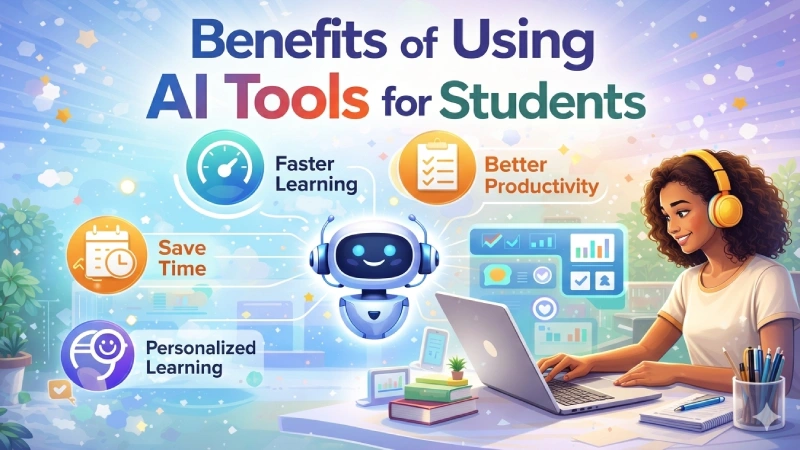
Faster learning
AI breaks complex topics into simple explanations. For example, if you struggle with difficult subjects, AI can guide you step by step.
Personalized education
Unlike textbooks, AI adapts to your learning style. Some students prefer visuals, while others learn through repetition or problem-solving.
Time-saving
AI automates tasks like note-taking, editing, and formatting. As a result, you save hours every week.
Better productivity
AI tools help manage schedules, assignments, and deadlines more efficiently.
24/7 availability
Unlike human tutors, AI is always available. This makes it ideal for late-night study sessions.
Overall, AI tools are no longer simple assistants. Instead, they act as intelligent study partners that guide you through the learning process.
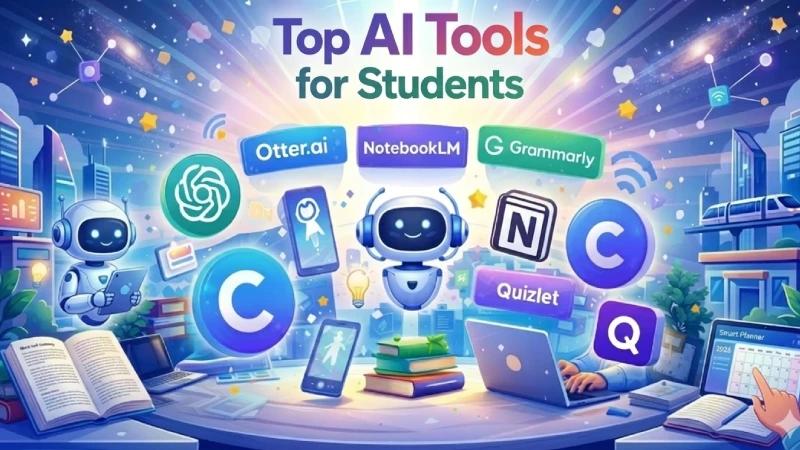
Top 10 Best AI Tools for Students in 2026
1. ChatGPT – The All-in-One Study Assistant
Best for: Writing, brainstorming, problem-solving, and tutoring
ChatGPT remains one of the most popular AI tools among students. It works like a personal tutor, helping you understand concepts and complete tasks.
Key Features:
- Explains complex topics in simple language
- Helps with essays, coding, and research
- Generates study plans and summaries
- Available 24/7 across devices
Why students love it:
It works across all subjects and adapts quickly to your needs.
2. Grammarly – AI Writing Assistant
Best for: Grammar, proofreading, and clarity
Good writing is essential for academic success. Grammarly helps improve your writing instantly.
Key Features:
- Advanced grammar correction
- Tone and clarity suggestions
- Plagiarism detection
- Works across multiple platforms
3. Notion AI – Productivity and Organization Tool
Best for: Notes, tasks, and planning
Notion AI combines note-taking with productivity tools.
Key Features:
- AI summaries
- Task management
- Study planning
- Collaboration features
4. Google NotebookLM – Research Companion
Best for: Research and document analysis
NotebookLM helps you understand your study materials better.
Key Features:
- Works with uploaded documents
- Creates summaries and notes
- Provides source-based answers
5. QuillBot – Paraphrasing Tool
Best for: Rewriting and summarizing
QuillBot improves clarity and helps avoid plagiarism.
Key Features:
- Paraphrasing modes
- Summarizer
- Citation generator
6. Canva AI – Design and Presentation Tool
Best for: Slides, posters, and visuals
Canva AI helps create professional designs quickly.
Key Features:
- AI slide generation
- Templates
- Image creation tools
7. Quizlet AI – Study and Memorization Tool
Best for: Flashcards and exam prep
Quizlet uses AI to improve memory retention.
Key Features:
- Smart flashcards
- Adaptive quizzes
- Spaced repetition
8. Photomath – Math Solver
Best for: Step-by-step math solutions
Photomath helps students understand math clearly.
Key Features:
- Scan problems
- Detailed explanations
- Covers advanced math topics
9. Otter.ai – Lecture Transcription Tool
Best for: Note-taking during lectures
Otter.ai converts speech into text in real time.
Key Features:
- Live transcription
- Searchable notes
- Collaboration tools
10. Google Gemini – AI Productivity Tool
Best for: Research and Google integration
Gemini works seamlessly with Google tools.
Key Features:
- Document summaries
- Email writing
- Data insights
Benefits of Using AI Tools for Students
AI tools provide real advantages for students.
Improved learning efficiency
You get instant explanations without wasting time searching.
Better time management
Automation helps you focus on important tasks.
Stronger writing skills
Tools like Grammarly improve your communication.
Personalized learning
AI adapts to your pace and style.
Reduced stress
Having assistance available anytime lowers pressure.
Challenges of Using AI in Education
Despite the benefits, there are some limitations.
- Over-reliance on AI
- Reduced critical thinking
- Academic integrity concerns
- Limited human interaction
- Data privacy issues
Because of this, students must use AI responsibly.
Tips to Use AI Tools Effectively
To get the best results, follow these tips:
- Use AI as a guide, not a shortcut
- Always verify information
- Rewrite answers in your own words
- Combine multiple tools
- Focus on learning, not just completing tasks
How AI Tools Are Changing Study Habits
AI is not just changing tools—it is changing how students learn.
Instead of passive reading, students now interact with information. They ask questions, get instant answers, and test their understanding immediately.
This creates a continuous learning loop.
As a result, students progress faster and stay more engaged.
AI vs Traditional Study Methods
AI enhances traditional learning rather than replacing it.
Traditional methods build strong foundations. Meanwhile, AI speeds up understanding and removes confusion.
Students who combine both approaches achieve better results.
How to Build an AI-Powered Study System
To maximize results, follow a structured system:
Step 1: Capture information (lectures, notes)
Step 2: Organize content (Notion AI)
Step 3: Understand concepts (ChatGPT)
Step 4: Summarize (QuillBot)
Step 5: Memorize (Quizlet)
Step 6: Apply knowledge (practice)
This approach ensures deep learning and better retention.
Best AI Tool Combinations for Students
Using tools together increases efficiency.
For writing: ChatGPT + Grammarly + QuillBot
For research: NotebookLM + ChatGPT + Notion
For exams: Quizlet + ChatGPT
For presentations: Canva AI + ChatGPT
Common Mistakes Students Make with AI
Avoid these mistakes:
- Copy-pasting without understanding
- Trusting AI blindly
- Using too many tools
- Ignoring academic rules
- Skipping critical thinking
AI Tools for Different Types of Students
Different students need different tools.
High school students: Quizlet, Grammarly, ChatGPT
University students: NotebookLM, Notion AI
Technical students: ChatGPT, Photomath
Non-native English speakers: Grammarly, QuillBot
AI for Group Study and Collaboration
AI improves teamwork.
Students can:
- Share notes
- Collaborate in real time
- Generate ideas together
This makes group projects faster and more organized.
How AI Improves Exam Preparation
AI helps create smarter study strategies.
- Focus on weak areas
- Generate practice questions
- Improve time management
- Strengthen memory
Privacy and Safety Tips
Stay safe while using AI:
- Avoid sharing sensitive data
- Use trusted tools
- Check privacy policies
Will AI Replace Teachers?
No.
AI cannot replace human teachers. It supports learning but does not replace guidance, experience, or emotional support.
Future of AI in Education
AI will continue evolving.
- Smarter AI tutors
- Personalized learning
- Integration in schools
- Career guidance tools
Students who learn AI early will have a strong advantage.
Conclusion
AI tools are transforming education in 2026. They help students learn faster, stay organized, and improve results.
However, success depends on how you use them.
Use AI wisely. Combine it with your own effort and critical thinking.
Start small, learn gradually, and build your system.
AI will not replace your effort—it will amplify it.
FAQ
A1: Top tools include ChatGPT, Grammarly, Notion AI, Canva, and Quizlet.
A2: They improve writing, research, note-taking, and overall productivity.
A3: Yes, if you use trusted platforms and avoid sharing personal data.
A4: No, AI supports learning but cannot replace real understanding.
A5: Yes, but paid tools offer better features and performance.