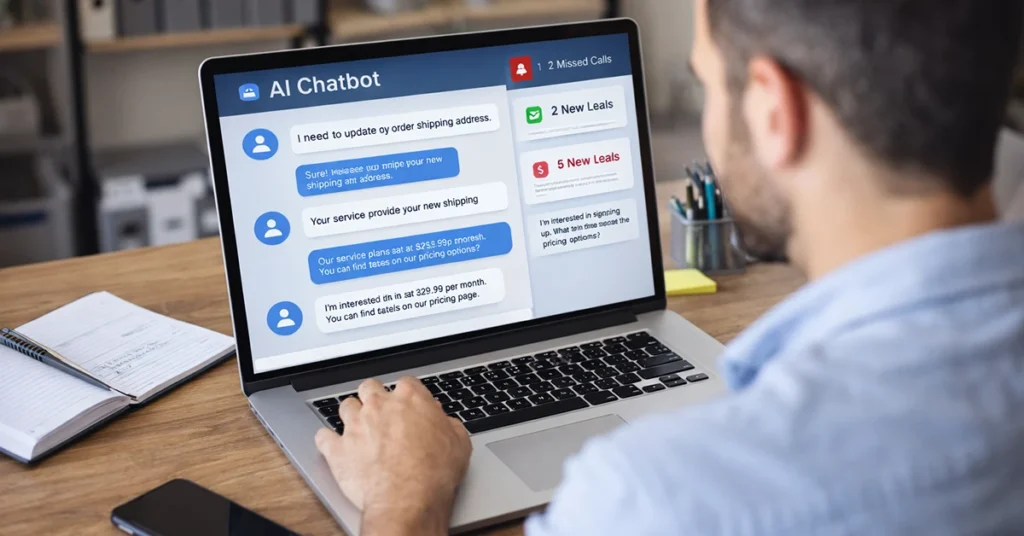
It’s 10 PM. Your website gets a visitor. They’re interested in your weekend workshop, but they have one quick question about parking. Since there’s no immediate answer, they leave. Just like that, a potential sale disappears—while you’re asleep.
Now imagine this happening every night, every weekend, and every time you step away from your desk. Over time, these missed moments quietly add up, draining revenue and momentum. In 2026, customer attention is short, and patience is even shorter.
Hiring round-the-clock support isn’t realistic for most small businesses. However, ignoring after-hours visitors is no longer an option either. Instead of working longer hours, successful businesses are choosing a smarter approach: AI-powered chatbots that handle customer questions automatically.
Importantly, today’s chatbots look nothing like the rigid, frustrating tools of the past. They are conversational, affordable, and designed for business owners—not developers. As a result, even the smallest teams can stay responsive without burning out.
The Problem: Customers Expect Instant Answers
Customer expectations have fundamentally changed. Waiting hours—or even minutes—for a reply feels outdated. When visitors don’t get immediate answers, they don’t complain. Instead, they leave and try another business.
For small teams, this creates constant pressure:
- You can’t monitor your website, Facebook, and Instagram 24/7
- You repeatedly answer the same basic questions every day
- Meanwhile, serious leads arrive after hours and disappear unnoticed
As a result, customer support becomes reactive and inefficient. Even worse, growth opportunities slip through the cracks simply because no one was available at the right moment.
The Insight: Chatbots Act as Your First Line of Support
Rather than thinking of chatbots as robots, it’s more accurate to view them as always-available front desk assistants. Their role isn’t to replace human conversations. Instead, they handle the first—and most repetitive—layer of interaction.
Most importantly, chatbots provide immediate engagement. They keep visitors on your site, answer initial questions, and guide next steps. By the time a human steps in, the conversation is already focused and productive.
In other words, chatbots don’t reduce personal service. They protect it.
What AI Chatbots Actually Do for Small Businesses in 2026
Modern chatbots handle practical, revenue-supporting tasks every day. Here’s how small businesses are using them right now.
1. Answer FAQs Instantly, 24/7
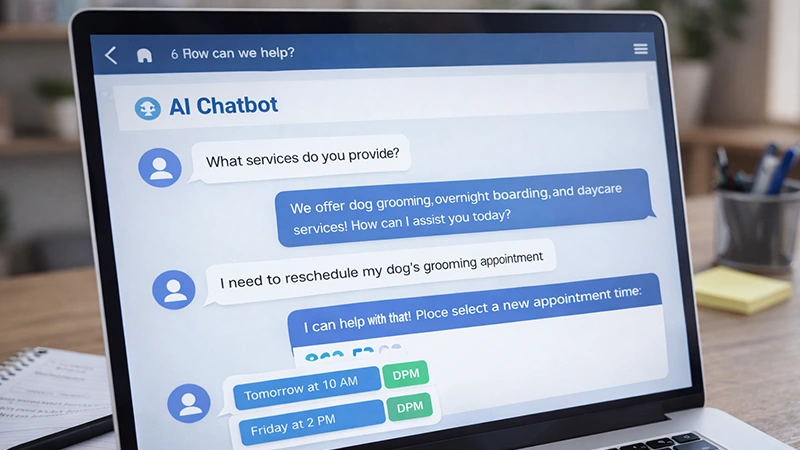
Chatbots excel at answering common questions without delay.
How it works:
You train the chatbot using your real FAQs, such as:
- What are your business hours?
- Where are you located?
- Do you offer delivery or refunds?
What’s different in 2026:
Instead of relying on exact keywords, modern chatbots understand intent. For example, if someone asks, “Can I bring my dog?” the chatbot connects that question to your pet policy—even if the wording is different.
Why it matters:
Customers get instant clarity, while your team avoids answering the same questions repeatedly. As a result, support time drops significantly.
2. Qualify Leads and Book Appointments Automatically
Beyond answering questions, chatbots can actively move visitors toward action.
How it works:
The chatbot asks simple, qualifying questions:
- Are you looking to book a service or ask a question?
- Do you prefer mornings or afternoons?
- Would you like to schedule now?
What’s improved in 2026:
Chatbots now integrate directly with tools like Google Calendar and Calendly. They can check live availability, confirm bookings, and send reminders—without human involvement.
Why it matters:
Your calendar fills automatically, even during nights and weekends. Consequently, fewer leads fall through scheduling delays.
3. Guide Visitors and Recommend Products
For service menus or online stores, chatbots act as helpful guides.
How it works:
Visitors describe what they need in plain language. The chatbot then suggests relevant services or products.
What’s new:
AI can analyze product catalogs and match recommendations based on context rather than exact filters.
Why it matters:
Customers feel guided instead of overwhelmed. At the same time, average order value often increases due to better recommendations.
4. Collect Contact Information and Escalate Issues
Not every question can—or should—be handled by a bot.
How it works:
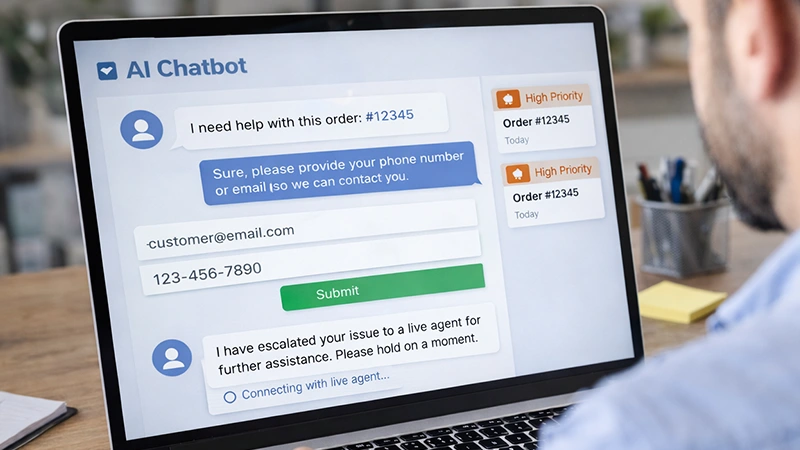
When a question becomes complex, the chatbot collects contact details and passes the issue to a human.
What’s better now:
Instead of failing, chatbots escalate gracefully by creating support tickets or notifications.
Why it matters:
No inquiry is lost. You receive organized, prioritized follow-ups instead of scattered messages.
The 2026 Chatbot Toolkit: No-Code Platforms
Setting up a chatbot no longer requires technical skills. Most platforms are visual and beginner-friendly.
Beginner-Friendly Options
- Tidio
- ManyChat
- Chatfuel
These tools offer templates, free plans, and quick website or Messenger integration.
Advanced AI Conversations
- Landbot
- Drift
These platforms support open-ended questions and deeper website integration.
Custom AI Assistants
- ChatGPT / Custom GPTs
For tech-comfortable teams, custom AI assistants trained on your website content can deliver brand-consistent answers at low cost.
How to Get Started in 30 Minutes
Starting small is not only easier—it’s smarter.
- Write down your top 10 customer questions
- Choose one beginner-friendly platform
- Build a simple welcome flow with three answers
- Install the chatbot widget on your site
- Test real conversations and refine responses
Over time, your chatbot improves naturally as it learns from real interactions.
AI Chatbots Are Just One Part of the Picture
AI chatbots often deliver the fastest results because they improve responsiveness immediately.
However, customer support is only one area where AI can make a measurable difference.
Beyond chatbots, small businesses are also using AI to streamline marketing, improve sales workflows, understand business data, and reduce manual tasks across daily operations. Each of these areas benefits from the same principle: faster responses, better insights, and more efficient use of time.
If you want a broader, practical overview of how small businesses use AI without hype or technical complexity, our guide on AI in small businesses explains where these tools create real value across marketing, sales, customer support, and daily operations.
The Bottom Line: Availability Builds Trust
In 2026, availability isn’t a bonus—it’s an expectation. AI chatbots help small businesses meet that expectation without adding stress or overhead.
They ensure customers are acknowledged, guided, and supported at every hour. More importantly, they protect your time while improving the customer experience.
Start with a few questions. Expand gradually. You’re not adding complexity—you’re creating a business that stays responsive, even when you step away.
FAQ
A1: An AI chatbot is a tool that automatically answers common customer questions, guides visitors, and collects contact details through a website or messaging app.
A2: No. AI chatbots handle routine questions and first responses, while humans remain essential for complex or sensitive issues.
A3: Many chatbot platforms offer free plans, with paid options typically ranging from $10 to $50 per month depending on features and usage.
A4: Yes. One of the main benefits of AI chatbots is 24/7 availability, allowing businesses to respond to customers even at night or on weekends.
A5: Most modern chatbot tools use no-code builders. Small business owners can usually set up a basic chatbot in under an hour.
A6: Yes. Many chatbots integrate with scheduling tools like Google Calendar or Calendly to book appointments without manual follow-up.
A7: Reputable chatbot platforms use encryption and comply with privacy standards, but businesses should still review data policies and limit sensitive information.