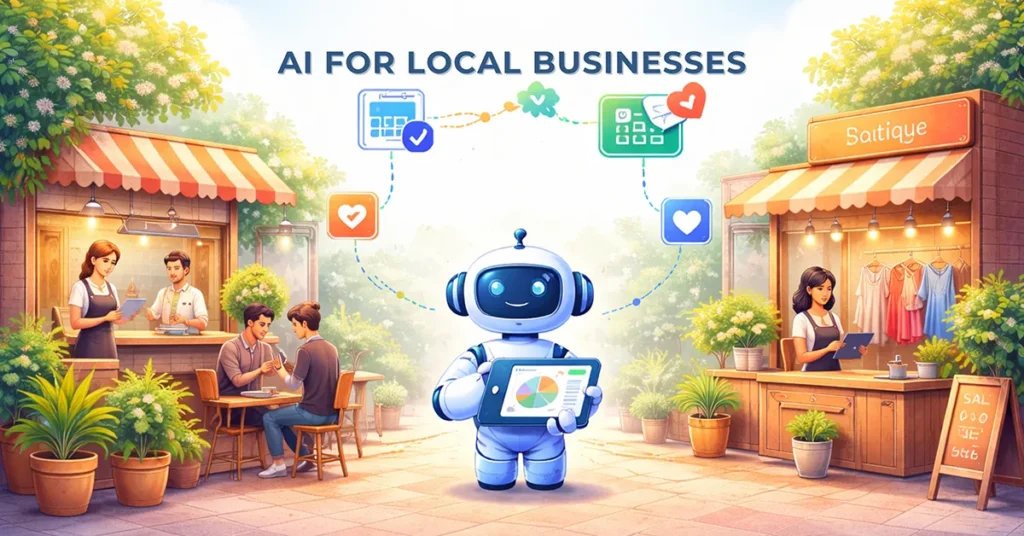
Local businesses run on real people, real conversations, and real time. You’re pouring coffee, cutting hair, or helping customers find the right product—not sitting behind a screen all day. So when people talk about AI, it often sounds distant, expensive, or irrelevant.
However, that assumption no longer holds.
Today, AI is quietly helping local businesses handle the repetitive work that slows everything down: missed appointments, slow afternoons, inventory guesswork, and inconsistent marketing. Not with robots or complex systems—but with simple software that fits naturally into how small, local businesses already operate.
This isn’t about turning your shop into a tech company. Instead, it’s about working smarter so you can spend more time serving customers and less time managing admin.
The Problem: Your Time Is Split Between Your Craft and a Screen
Running a local business means wearing multiple hats every day. As a result, the most valuable resource—your time—gets stretched thin.
Common challenges include:
- Scheduling headaches: constant calls, no-shows, last-minute cancellations
- Unpredictable demand: quiet weekdays and sudden rushes
- Local visibility pressure: staying top-of-mind without a big marketing budget
- Inventory blind spots: running out of popular items or overstocking slow sellers
Individually, these problems feel manageable. Together, they quietly drain energy, profit, and focus.
The Insight: AI Acts Like a Silent, Reliable Manager
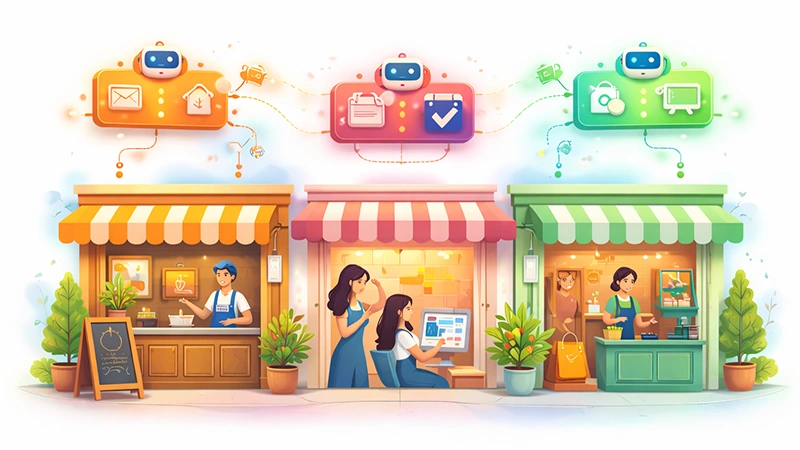
For local businesses, AI works best behind the scenes.
Rather than replacing people, it supports everyday decisions using data you already generate—appointments, sales receipts, foot traffic, and customer behavior. Over time, this creates smoother operations without adding complexity.
In other words, AI doesn’t change what you do. It improves how consistently and efficiently it gets done.
How Restaurants and Cafés Use AI to Stay Busy
The challenge
Empty tables during off-hours, food waste, and constant pressure to promote specials.
How AI helps
- Demand prediction: AI tools analyze past sales, weather, and local events to highlight slow periods before they happen.
- Targeted promotions: Automated texts or app notifications reach nearby customers at the right time.
- Menu and content support: AI can help draft daily special descriptions or quick social posts using available ingredients.
Real outcome
Fewer empty tables, less waste, and more predictable revenue during quieter hours.
How Salons and Service Businesses Protect Their Calendar
The challenge
No-shows, gaps between bookings, and clients forgetting to rebook.
How AI helps
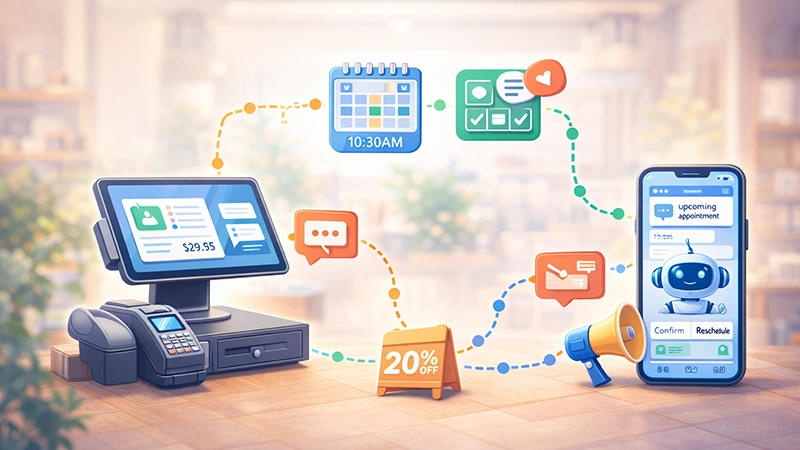
- Smart reminders: Automated texts reduce missed appointments without manual follow-ups.
- Waitlist automation: Cancelled slots are filled automatically from a waitlist.
- Client re-engagement: AI flags inactive clients and sends timely rebooking messages.
Real outcome
Higher booking rates, steadier cash flow, and fewer last-minute surprises.
How Retail Shops Use AI to Sell Smarter
The challenge
Unclear buying patterns, inventory guesswork, and generic promotions.
How AI helps
- Sales insights: Modern POS systems highlight buying trends and bundle opportunities.
- Stock forecasting: AI predicts when bestsellers need reordering.
- Personalized offers: Loyalty systems send relevant promotions based on purchase history.
Real outcome
Better inventory control, higher average purchases, and more repeat customers.
Why AI Works Best When the Whole Business Is Connected
Local businesses see the biggest gains when AI supports more than one area at a time.
For example, engagement data from social media can connect naturally with follow-ups, booking reminders, or promotions—reducing manual tracking and missed opportunities. This broader view reflects how AI supports everyday decision-making across small businesses, not just one department at a time.
A broader look at how AI delivers real value across small business operations shows why these connections matter in practice—not theory.
A Simple AI Starter Kit for Local Businesses
You don’t need everything. Start with one problem.
| Your biggest issue | Start here | First step |
|---|---|---|
| Missed appointments | Booking software with reminders | Turn on SMS confirmations |
| Slow weekdays | POS analytics or demand tools | Identify your quietest hours |
| Inventory surprises | POS stock alerts | Set low-stock warnings |
| Social media fatigue | Canva + AI captions | Create one week of posts |
How to Implement AI Without Disrupting Your Routine
- Choose one task that frustrates you the most
- Use tools you already have before buying anything new
- Set it up during quiet hours and test it yourself
- Let customers know what’s improved (reminders, loyalty perks, faster service)
Small changes add up faster than big overhauls.
The Bottom Line: Smarter Local Businesses Win Quietly
AI for local businesses isn’t about trends or technology hype. Instead, it’s about removing friction from everyday work.
It helps fill empty chairs, reduce missed bookings, and simplify decisions—without taking control away from you. When used well, AI becomes invisible support, not a distraction.
Start small. Fix one recurring problem. Let the improvement compound.
That’s how local businesses stay competitive—right where they are.
FAQ
A1: Yes. Many local businesses already use AI through booking systems, POS software, and marketing tools. These features help automate routine tasks like scheduling, reminders, and basic customer communication without requiring technical skills.
A2: No. Most AI features are built into tools local businesses already use, such as appointment software, point-of-sale systems, or design platforms. Many offer free or low-cost plans that are enough for daily operations.
A3: Yes. AI-powered scheduling tools send automated reminders, manage waitlists, and fill cancelled slots faster. This helps reduce missed appointments and improves daily revenue consistency.
A4: No. AI supports staff by handling repetitive tasks. It does not replace human service, creativity, or personal interaction, which remain essential for local businesses.
A5: Most businesses notice small improvements within a few weeks, such as saved time or fewer missed bookings. Results grow gradually as tools become part of daily workflows.
A6: Reputable platforms follow standard data protection practices. Business owners should still review privacy settings and use trusted providers, especially for customer contact information.